The journey to higher education or selecting a new school no longer begins with physical brochures or campus tours. It starts with a search query.
Whether it is a parent looking for the “best preschool near me” or a student researching “top data science degrees with placement assistance,” search engines dictate enrollment trends. For educational institutions, relying solely on paid ads is a costly and unsustainable strategy; once the budget runs dry, the lead flow stops.
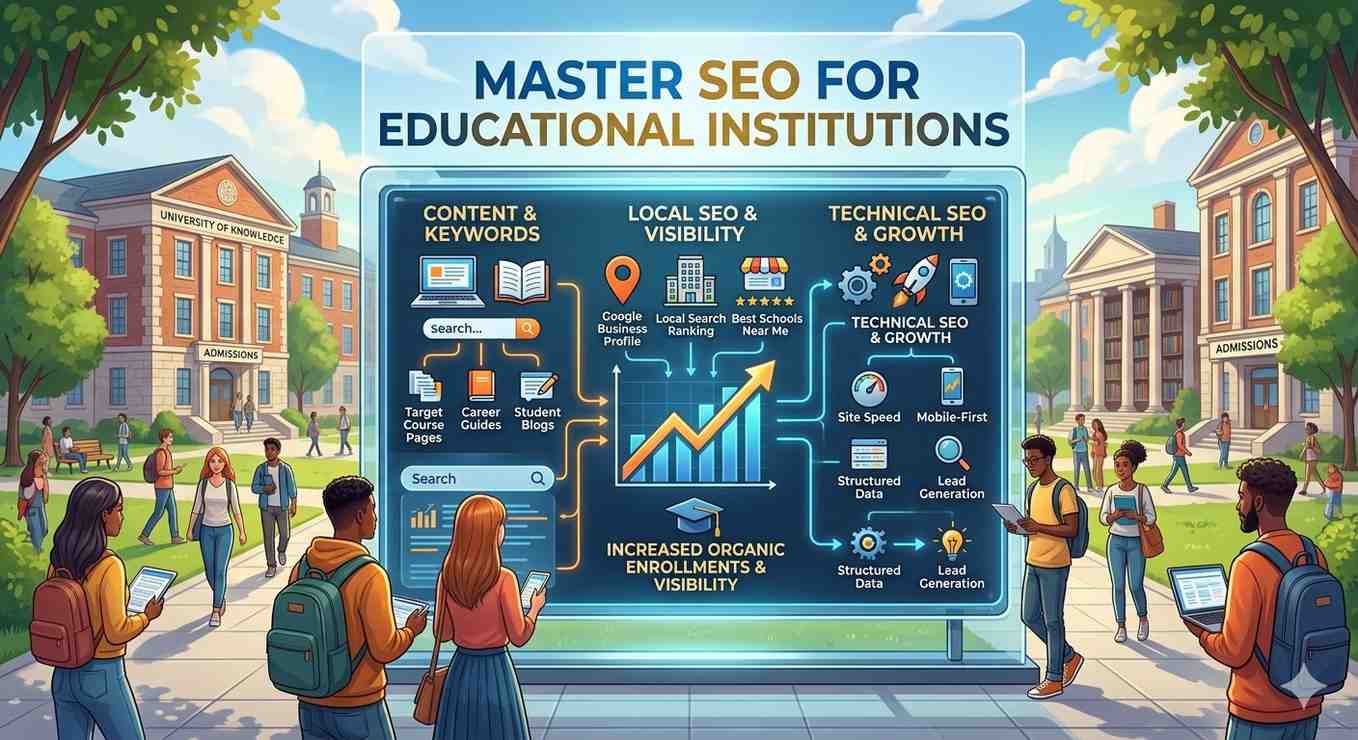
Search Engine Optimization (SEO) builds a continuous, 24/7 organic marketing engine that positions your institution as a trusted authority. This guide maps out the ultimate strategy to boost your digital presence and drive student enrollments.
Understanding the Multi-Stage Student Journey
Unlike retail e-commerce, the decision-making process in education is lengthy, research-heavy, and high-stakes. To rank effectively, your content must align with the three main phases of the student and parent intent funnel:
1. The Awareness Stage (Exploration)
At this point, prospects are looking for general guidance, not a specific institution. They are exploring potential career paths and future opportunities.
-
Target Queries: “High salary career options after graduation,” “What does a UX designer do?” “Future scope of AI and machine learning.”
-
SEO Content Asset: Informative blog posts, career roadmaps, and industry trend reports.
2. The Consideration Stage (Comparison)
Prospects have identified their field of interest and are actively evaluating alternative routes, formats, and institutions.
-
Target Queries: “BTech vs BCA which is better,” “Online MBA vs regular MBA program cost,” “Top engineering colleges with campus placement.”
-
SEO Content Asset: Comprehensive comparison guides, downloadable brochures, and alumni success spotlight videos.
3. The Decision Stage (Conversion)
The search intent becomes highly specific, localized, and action-oriented. The prospect is ready to apply or visit.
-
Target Queries: “Best private school in [City Name] admissions,” “Data Science degree course fees,” “Apply online for nursing course.”
-
SEO Content Asset: High-converting, frictionless course landing pages and comprehensive FAQ sections.
Core Pillars of an Education SEO Strategy
To dominate search engine result pages (SERPs), an institution must execute a multi-layered SEO plan covering technical health, content depth, and local relevance.
1. Structure High-Intent Course Pages
Every degree, diploma, or certificate program page should act as a mini information hub. Search engines favor pages that thoroughly satisfy user intent. Ensure your core landing pages cleanly incorporate:
-
Clear eligibility criteria and admission prerequisites.
-
Curriculum breakdowns highlighting skills aligned with modern workplace demands.
-
Transparent tuition costs and scholarship/financial aid pathways.
-
Transparent job outcomes, placement partnerships, and notable alumni companies.
2. Dominate Local SEO (The “Near Me” Goldmine)
A significant majority of school choices and commuting college choices are bound by geography. If you are not visible in local searches, you are losing immediate regional enrollments.
-
Optimize Google Business Profile (GBP): Ensure your exact institution name, address, phone number (NAP data), operating hours, and campus photos are accurate across the web.
-
Gather Authentic Reviews: Actively encourage current students, parents, and alumni to leave detailed, positive reviews on your Google listing.
-
Local Landing Pages: Target geo-specific terms natively in your meta tags and headers (e.g., “Top CBSE Board School in North Delhi”).
3. Technical SEO & Mobile-First Experience
Educational sites are often massive, burdened with legacy student portals, department subdomains, and media libraries. A sluggish or confusing site ruins rankings.
-
Page Speed Optimization: Compress heavy campus promotional images, clean up redundant code, and leverage browser caching to keep page load times under 3 seconds.
-
Flawless Mobile Experience: Over 70% of initial educational searches happen on mobile devices. Your menus, application forms, and virtual tour components must render flawlessly on smartphones.
-
Structured Data (Schema Markup): Implement Course, FAQ, and Organization schema. This helps search engines understand your programs and can reward your site with rich snippets in search results.
4. Build Digital Authority (Off-Page SEO)
Google measures trustworthiness based on who links back to you. For educational institutions, earning backlinks means utilizing your natural networks:
-
Academic & Government Backlinks: Collaborate on research projects or host local community events that earn links from
.eduor.govsites. -
Alumni and Industry Networks: Get featured on local news platforms or build profiles on prominent educational directories and career blogs.
Summary of Actionable SEO Priorities
| Focus Area | Core Action | Expected Outcome |
| Content Strategy | Build an intent-driven blog answering student FAQs. | Attract top-of-funnel organic traffic. |
| Local SEO | Claim, optimize, and update your Google Business Profile. | Rank in the local “3-Pack” map results. |
| On-Page SEO | Turn program pages into conversion-focused landing hubs. | Lower bounce rates and boost application leads. |
| Technical SEO | Implement clean internal linking and optimize mobile speed. | Faster crawling, indexing, and seamless UX. |
Conclusion
SEO for educational institutions isn’t a quick-fix marketing campaign; it is a long-term equity investment. By moving away from thin, keyword-stuffed articles and building a robust, intent-driven ecosystem that genuinely answers student queries, your institution will build lasting authority. Start optimizing your digital campus today, and watch your organic enrollment funnel thrive season after season.